






1.3 billion uptime checks per day

DNS monitoring to prevent outages before they reach your users

  • Validate availability from 130+ locations
  • Detect resolution failures
  • Catch unauthorized record changes

No credit card required · 30-day full-feature trial · Free plan available

Trusted by
Disney Logo Bajaj Finserv Logo Ford Logo GEP Logo Beyondtrust Logo Godaddy Logo Sap Logo Upland Logo

Everything you need to stay ahead of DNS failures

Connect DNS availability, performance, alerting, and historical reporting in one continuous monitoring workflow.

Resolve domain names from over 130 global monitoring locations

DNS performance varies by geography. A domain that resolves in 12ms from the East Coast of the United States may time out in the Asia-Pacific region due to propagation delays or misconfigured resolvers. Site24x7's locations across six continents provide accurate, location-specific resolution data, ensuring your domain is accessible to every user, everywhere.

  • Identifying region-specific DNS failures and latency spikes that single-location tools miss
  • TCP or UDP protocol selection based on your name server configuration
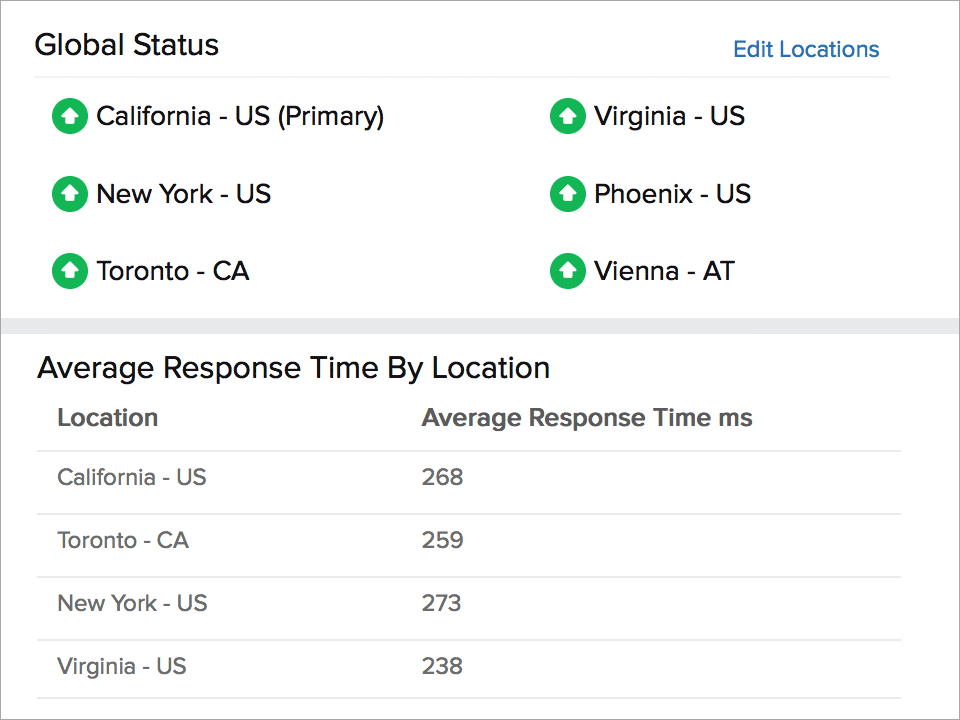
  • Per-location availability and response time breakdowns in every report
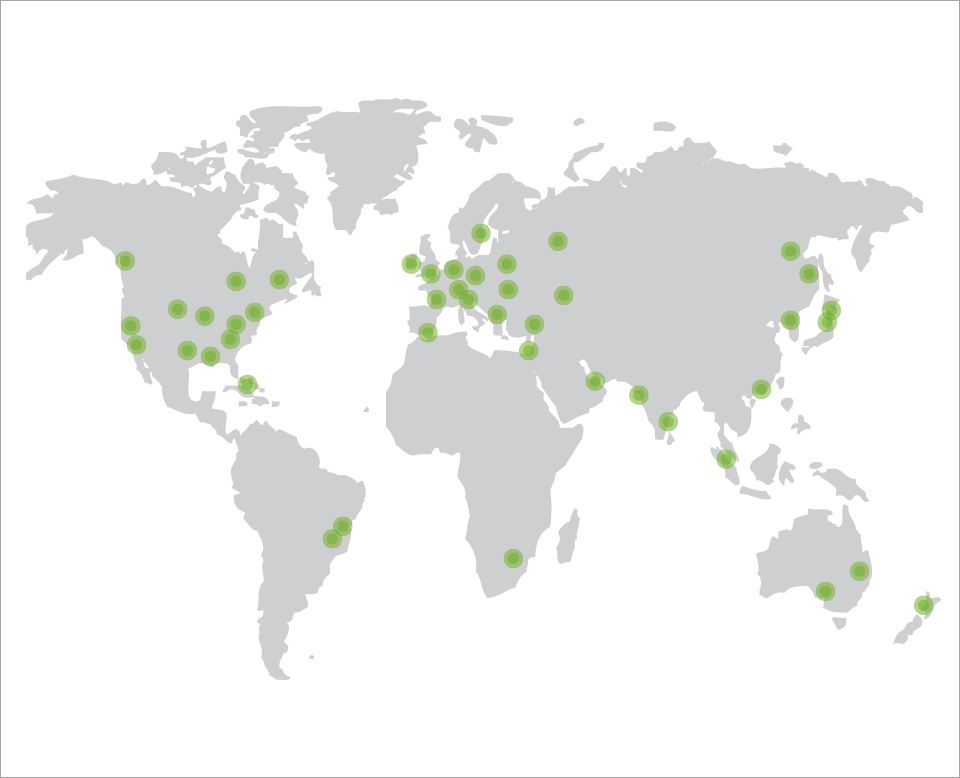
Global DNS Monitoring Locations

Trace DNS resolution failures to their root cause

Get a full RCA report within minutes of any DNS incident. Site24x7 isolates whether the failure stems from your own infrastructure or a third-party provider (upstream TLD servers, recursive resolvers, or managed DNS services) and correlates query performance with network path data so you can fix the right thing, fast.

  • Provides full resolution path tracing: DNS analysis, ping checks, TCP traceroute, and My Traceroute (MTR) diagnostics
  • Compares expected DNS records against actual resolved values to spot propagation mismatches
  • Cuts the MTTR by eliminating guesswork during DNS incidents
DNS Root Cause Analysis

Set performance thresholds and get alerted about DNS anomalies

Don't wait for users to report slow page loads caused by DNS latency. Configure static thresholds for primary and secondary locations, or enable AI-powered anomaly detection that learns your DNS performance baseline automatically.

  • Static and AI-based (Zia) thresholds for the DNS response time and record accuracy—no manual baseline tuning required
  • Confirming genuine DNS failures with multiple validation strategies: the poll count, time duration average, and moving average
  • Instant DNS alerts via Slack, Microsoft Teams, Google Chat, SMS, voice calls, email, RSS, and push notifications
DNS Threshold Alerting

Analyze DNS performance trends and track historical data

Go beyond real-time monitoring with reports that reveal long-term performance patterns. Track response time trends, availability percentages, and busy hour data across all locations—then export SLA reports and CSV logs to hold providers accountable and support compliance audits.

  • 95th percentile response times and moving averages to catch gradual degradation before it becomes an outage
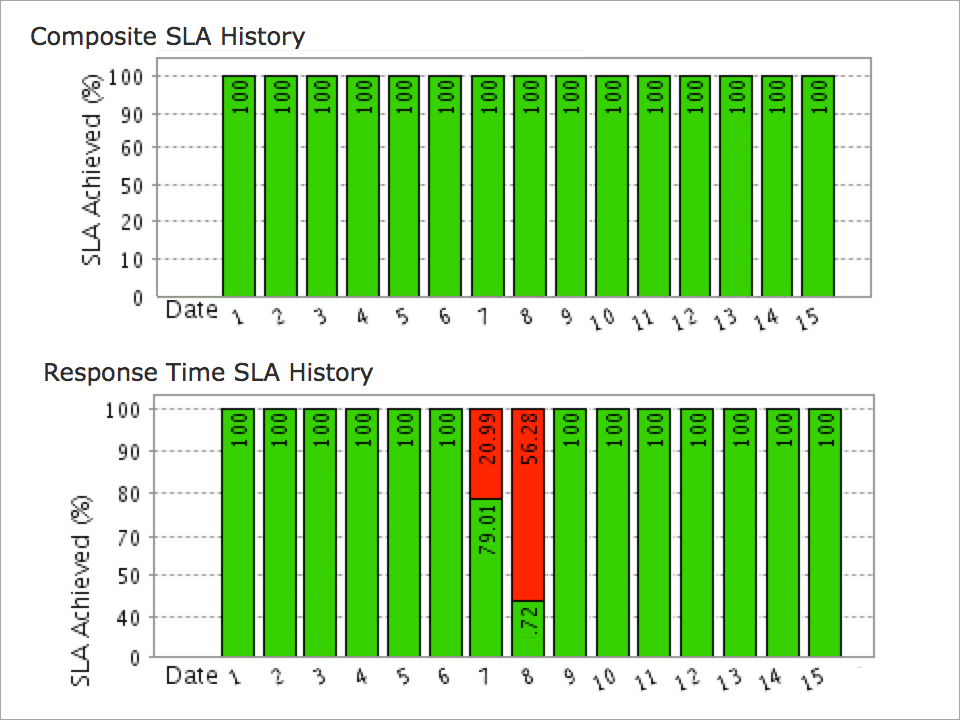
  • SLA reports that quantify the DNS provider uptime against committed thresholds
  • CSV log exports for capacity planning, compliance audits, and historical trend analysis
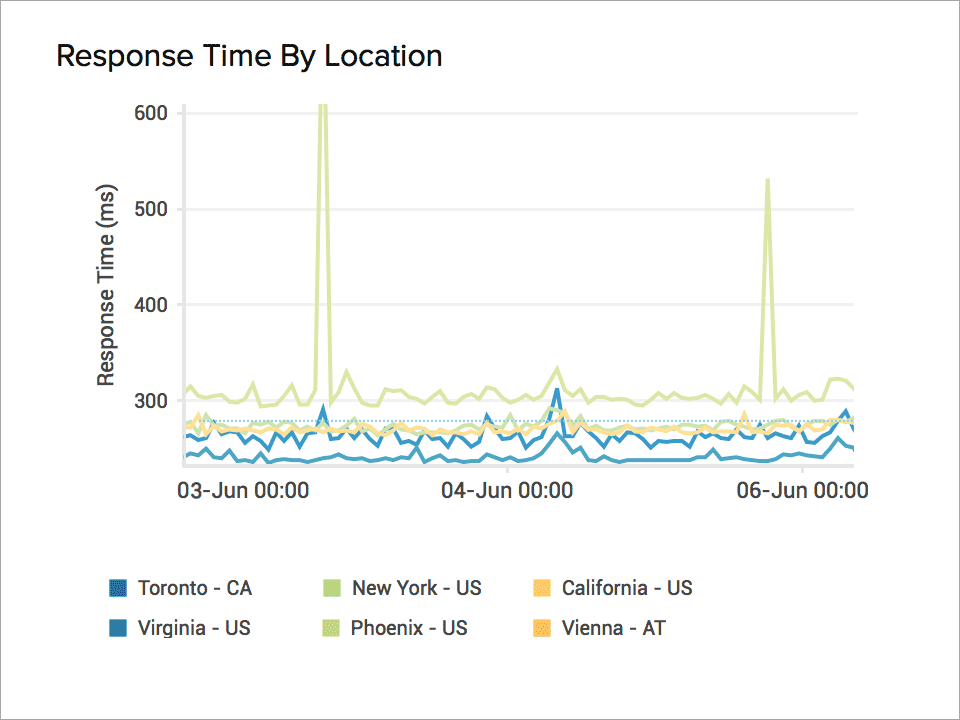
DNS Performance Reports and Trends

Track critical DNS metrics with deep record-level visibility

Monitor and validate these key DNS metrics across every poll cycle, from response time to DNSSEC chain integrity.

DNS response time

Measure how quickly your name server resolves queries. View average response times across all monitoring locations for a global performance baseline.

Why it mattersDNS latency adds directly to every user’s first connection time.

DNS record validation

Verify that the correct record type is returned and matches your expected configuration using regular-expression-based answer validation that supports A, AAAA, CNAME, MX, NS, SOA, PTR, SRV, TXT, CAA, DS, and DNSKEY.

Why it mattersA wrong record value can silently break routing, email, or security configuration.

DNSSEC validation

Authenticate DNS responses using DNSSEC to protect against cache poisoning and DNS hijacking attacks.

Why it mattersWithout DNSSEC, attackers can redirect your users without touching your servers.

Record change detection

Get alerted instantly when DNS records are modified, whether due to planned changes, propagation issues, or unauthorized tampering.

Why it mattersUnauthorized record changes are often the earliest sign of a DNS attack.

DNS propagation monitoring

Track how quickly record updates propagate across global name servers after a DNS change, confirming that all resolvers return consistent, up-to-date values.

Why it mattersPropagation failures cause regional outages that single-location tools miss entirely.

Cloud DNS metrics

Track query volume, record set count, and capacity utilization for Amazon Route 53, Azure DNS, and Google Cloud DNS alongside traditional name server monitoring.

Why it mattersUnified visibility prevents blind spots when DNS spans multiple providers.

The right DNS monitoring tool for your role

Track DNS uptime, security, and performance from one platform with zero blind spots.

IT administrators

“We find out about DNS failures from users.”

Get alerted the moment a record changes or a name server goes dark. Automated root cause analysis (RCA) tells you exactly where the failure originated, so you spend less time hunting and more time fixing.

DevOps & SRE teams

“DNS issues look like application errors until you’ve wasted an hour debugging the wrong layer.”

Correlate DNS latency with server health, network metrics, and application performance on a single dashboard and get your answer in seconds.

Cloud & platform engineers

“We run DNS across Amazon Route 53, Azure DNS, and on-premises, and we have no single view of it all.”

Monitor DNS health across Amazon Route 53, Azure DNS, and Google Cloud DNS alongside traditional name servers from a single dashboard.

Start monitoring in 3 steps

There are no agents to install and there's no complex configuration. Add your first DNS monitor in less time than it takes to brew coffee.

01

Add your DNS server

Enter your DNS host, select the record type (A, MX, CNAME, DNSSEC, and eight more), and set your expected value for validation.

02

Select thresholds and alert channels

Configure response time thresholds for primary and secondary locations. Choose alert channels: Slack, Microsoft Teams, SMS, email, voice calls, or PagerDuty.

03

Get notified before users notice

Site24x7 polls from over 130 global locations and sends an alert the moment something deviates—with a full RCA report attached.

Why teams buy Site24x7's DNS monitoring

Site24x7 is the clear upgrade when you DNS monitoring with AIOps support and full-stack observability.

Feature Site24x7
Global monitoring locations 130+
DNS record types supported 12 (all major types)
DNSSEC validation
AI-powered anomaly detection (Zia)
Automated RCA Full RCA
DNS propagation monitoring
Cloud DNS (Amazon Route 53, Azure DNS, and Google Cloud DNS) All three
Full-stack observability correlation
SLA reporting and CSV exports
Free plan or trial 30-day free trial
Free monitors Up to 50
Paid plans start from $9/month

Trusted by 13,000+ paid customers worldwide

IIFL logo

"With Site24x7 monitoring 24/7, 365 days a year, the manpower needed to monitor assets has significantly come down. That's helping us reduce total cost of investment across our infrastructure."

Prashant Ahire

VP of IT · IIFL

Delasport logo

“60% of website issues are caught in advance, thanks to Site24x7.”

Evgeni Hristov

Team lead, NOC team, Delasport

"Comprehensive Monitoring Made Simple" Site24x7 has streamlined our monitoring with ease of use, accurate alerts, and dependable support. It gives us complete visibility and confidence in our systems.”

Uday

Sr IT Admin · Management Consulting, Software for: 2+ years

Unify DNS monitoring across on-premises, cloud, and hybrid environments

Modern DNS infrastructure spans multiple providers and platforms. Your authoritative name servers may run on premises while your public-facing domains use cloud DNS services like Amazon Route 53, Azure DNS, or Google Cloud DNS

Site24x7 provides a single pane of glass for monitoring DNS health across all environments, eliminating the need to switch between separate management consoles for each provider. If your enterprise depends on external managed DNS services, this unified view is essential for detecting issues in third-party DNS infrastructure that you don't directly control but that still impacts your users.

Track cloud-specific DNS metrics, including the query volume, record set count, and record set capacity utilization, alongside traditional DNS server monitoring. Use capacity trend data to forecast when DNS zones will approach utilization thresholds—so you can scale resources before the query volume impacts resolution performance.

If your organization runs split-horizon DNS or GeoDNS configurations, validate that location-based routing policies return the correct records for each region. Combine DNS monitoring with synthetic monitoring to measure the full impact of DNS resolution on transaction performance and the user experience across your entire application delivery chain.

Everything you need to know

What is a DNS monitoring tool?

A DNS monitoring tool automates the process of querying your DNS servers at regular intervals, measuring response times, validating the record accuracy, and alerting your team when something goes wrong. It checks DNS health from multiple geographic locations to detect regional issues that local testing would miss. Advanced DNS monitoring tools like Site24x7 also support DNSSEC validation, AI-based anomaly detection, configurable performance thresholds, and automated RCA to help you troubleshoot failures faster.

Why is DNS server monitoring important?

DNS is the first step in every web request—if it fails, nothing else works. Without DNS monitoring, threats like DNS cache poisoning, DDoS attacks, and unauthorized record changes can go undetected, leading to prolonged outages, misdirected traffic, and compromised security. DNS monitoring helps you detect both targeted attacks and operational failures (expired records, misconfigured servers, propagation delays, etc.), ensuring your domain remains reachable, secure, and performant for every user.

How does DNS monitoring work?

DNS monitoring tools send DNS queries from multiple global locations at configurable intervals—as frequently as every 10 seconds with Site24x7. Each query checks whether the target DNS server responds, how long it takes to resolve, and whether the returned record matches the expected value. If the response is too slow, incorrect, or missing, the tool triggers an alert. Advanced monitoring tools also validate DNSSEC signatures, compare records across poll cycles to detect unauthorized changes, and run automated RCA—including DNS analysis, traceroute, and MTR diagnostics—to pinpoint exactly where and why a failure occurred.

Why choose Site24x7 as your DNS monitoring tool?

DNS monitoring delivers measurable benefits for availability, security, and performance:

  • Faster incident response: Real-time alerts via multiple channels reduce the mean time to detection and resolution for DNS outages.
  • A stronger security posture: DNSSEC validation and record change alerts detect DNS spoofing, cache poisoning, and unauthorized modifications before they redirect user traffic.
  • Improved website performance: Response time thresholds and trend analysis help you catch DNS latency creep that gradually degrades page load speeds
  • Reduced downtime: Multi-location polling confirms genuine outages and reduces false positives, so your team focuses on real issues.
  • Better capacity planning: Historical performance data, 95th percentile tracking, and SLA reports provide the trends needed to forecast DNS infrastructure requirements.
Does Site24x7 monitor cloud DNS services like Amazon Route 53, Azure DNS, and Google Cloud DNS?

Yes. Site24x7 provides native monitoring integrations for Amazon Route 53, Azure DNS, and Google Cloud DNS. You can track cloud-specific metrics ,like the query volume, record set count, and record set capacity utilization, alongside your traditional DNS server monitoring—all from a single dashboard. Use capacity trend data to identify when DNS zones approach utilization limits—before they affect resolution performance. This gives you unified visibility across on-premises, hybrid, and multi-cloud DNS infrastructure without requiring you to switch between separate management consoles.

Is there a free DNS monitoring tool?

Yes. Site24x7 offers a 30-day, free trial with full access to DNS monitoring capabilities, including multi-location monitoring, DNSSEC validation, threshold-based alerting, RCA, and all reporting features. No credit card is required for you to get started.

What are the DNS monitoring best practices?

Effective DNS monitoring starts with monitoring from multiple geographic locations to detect region-specific failures that local checks would miss. Set up checks against both your authoritative DNS servers and recursive resolvers to verify that each layer of your DNS infrastructure is healthy. Enable DNSSEC validation to guard against spoofing attacks. Configure response time thresholds based on your application's latency budget, not just default values.

Monitor all critical record types (A, AAAA, MX, CNAME, NS, etc.) rather than just checking the availability. If you rely on third-party services or managed DNS providers, monitor their infrastructure independently so you can detect issues outside your direct control. Use automated alerting with escalation policies so DNS outages are never missed outside business hours. Finally, review DNS performance trends and capacity utilization weekly to catch gradual degradation before it triggers an incident.

What is the difference between DNS monitoring and DNS lookups?

A DNS lookup is a one-time query that resolves a domain name to an IP address; it tells you what the DNS server returned at that specific moment. A DNS monitoring tool, by contrast, performs automated DNS lookups continuously from multiple locations at scheduled intervals. It tracks response time trends over time, validates that returned records match expected values, detects unauthorized changes, and triggers alerts when failures occur. While a DNS lookup is a diagnostic snapshot, DNS monitoring provides ongoing visibility into DNS availability, performance, and security, making it essential for production environments where undetected DNS issues lead to downtime.

Looking for assistance? We’re here to help!

Want to learn more?

  • Personalized product demo
  • Proof of concept for set up
  • 30-day, unlimited, free trial
Request a Demo

Interested in our services?

  • 24/5 customer support
  • Flexible and competitive pricing
  • Better ROI
Get quote